Over the years, Dr. Charles Musiba has advised several graduate projects for which he either served as a committee member or principal advisor. These theses and dissertations have ranged from topics covering hominin paleobiology and primate behavioral ecology. Below is a list of these students, past and present.
Current Graduate Students
A note from Dr. Musiba’s current graduate students: Although the EARTHO Lab is NOT currently accepting new graduate students, we are open to collaboration. Please feel free to reach out to us regarding any questions you may have!
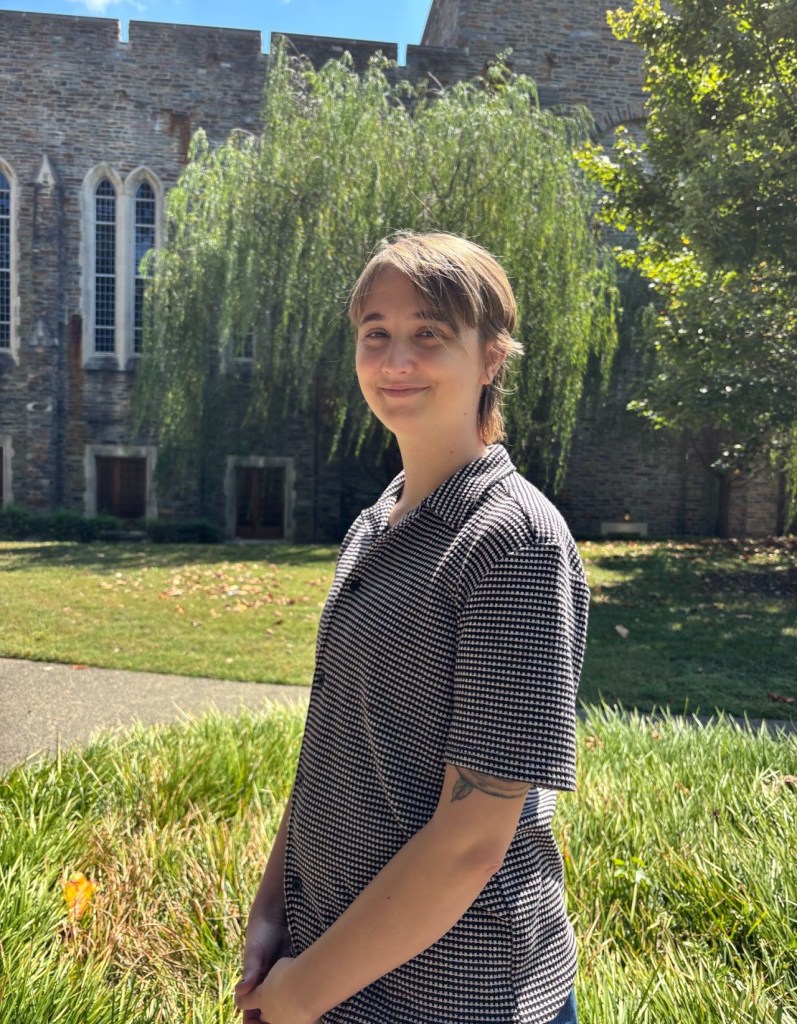
Abi Human
Ph.D. Candidate
Evolutionary Anthropology, Duke University
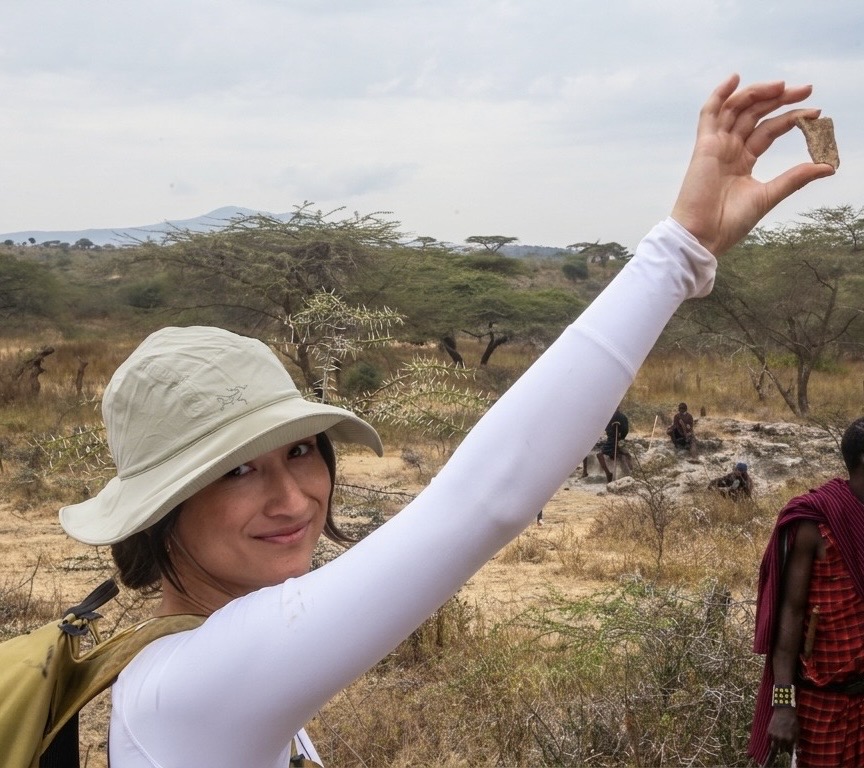
Alexandria Sambrano (she/hers)
Ph.D. Student
Evolutionary Anthropology, Duke University
Alex is a Ph.D. student, in both the Boyer and EARTHO Labs, interested in studying the functional morphology and biomechanics of the primate knee.
Alex completed her undergraduate degree at the University of Pennsylvania, majoring in Biological Anthropology. There she completed various projects with Dr. Myra Laird, including her honors thesis where she investigated how adaptations to both brachiation and bipedalism are reflected across the development of gibbons. During this time, she also completed an NSF REU at the American Museum of Natural History under Dr. Ashley Hammond and Dr. Deming Yang, where she investigated the effects of dental specialization on occlusal morphology in African pigs.
At Duke, she is particularly interested in how variations in knee structure reflect locomotor diversification patterns in extant and fossil primates. More broadly, her work seeks to provide a holistic view of how primates are structurally adapted to perform a diverse range of locomotor strategies. She is further inspired by recontructions of muscle morphology for extinct material. To do this, she applies biomechanical methodologies that integrate analyses of the entire musculoskeletal system as well as evolutionary approaches to interpretations of skeletal morphology while also crucially recognizing the functional relationship between multiple skeletal systems. By using an evolutionary approach, she also hopes to address how different evolutionary transitions may contribute to contemporary clinical problems in humans.
Keywords: evolutionary anatomy, functional morphology, biomechanics, paleoanthropology, locomotion

Keywords: anatomy, paleoanthropology, orthopedics, biomechanics, functional morphology, human evolution
Faye Hardek (she/hers)
Ph.D. Student
Evolutionary Anthropology, Duke University
Faye is a Ph.D. student in the EARTHO lab with an interest in studying the biomechanics of the pelvis throughout hominin evolutionary history, including present-day.
She graduated from Duke University in 2025 with a B.S. in Evolutionary Anthropology and a minor in Spanish. During her undergraduate years, she conducted research with Dr. Charles Musiba and Dr. Steven Churchill deciphering a miscellaneous collection of Late-Miocene carnivore bones from Langebaanweg, South Africa. Furthermore, with Dr. Daniel Schmitt she designed a project investigating the effects of taking gender-affirming hormones (GAH) during different stages of puberty on sacroiliac joint mobility and health outcomes in transitioning teenagers.
As a graduate student, her primary research interests lie in the anatomy, biomechanics, and functional morphology. More specifically she aims to investigate how morphological changes to the pelvis in our bipedal ancestors can inform patient care for individuals with orthopedic injuries. One of her current projects is in conjunction with the Department of Orthopaedic Surgery at the Duke University School of Medicine. Ultimately, she believes that evolutionary studies of the biomechanics and morphology of our primate relatives can provide insight on how to better treat illness and injury in present-day humans.
Affiliated Graduate Students

Daniele Trujillo-Hassan (she/hers)
Ph.D. Candidate, Pontzer Lab
Evolutionary Anthropology, Duke University
Daniela Trujillo Hassan is a biological anthropologist whose research bridges human energetics, diet, and ecology across past and present populations. Her work combines stable isotope analysis, double-labeled water methods, and field-based studies of metabolism to understand how environment, technology, and subsistence strategies shape energy expenditure and nutrition. She collaborates with interdisciplinary teams examining archaeological food webs in the Andes and contemporary health and adaptation in Indigenous communities of the Darién region.
Keywords: energetics, ecology, diet

